



Working principle and advantages of CNG dual-fuel vehicles
On the basis of retaining the original vehicle fuel system, a new compressed natural gas supply system is added. The control system switches between the two fuels to work independently, ultimately achieving combustion of natural gas or fuel in the cylinder to drive the piston to do work. The specific system composition and workflow are as follows:
1. Core components
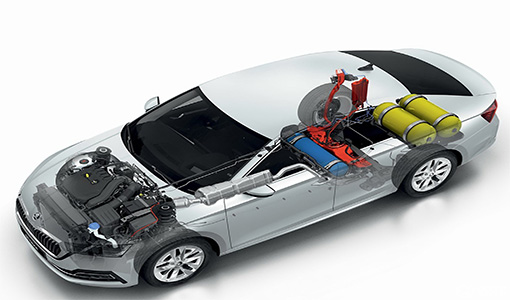
CNG dual-fuel vehicles consist of two independent fuel supply systems, along with a dedicated control module:
Retain the original system: Retain the original gasoline/diesel supply system of the vehicle, with almost no structural modifications
New natural gas system: It primarily consists of three parts:
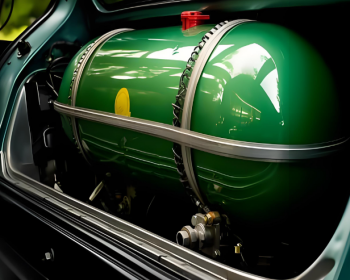
Gas storage system: comprising a charging valve, a high-pressure CNG storage cylinder, high-pressure pipelines, etc., capable of storing compressed natural gas at a pressure of approximately 20MPa
Supply system: comprising a three-stage pressure reducer, mixer/air nozzle, power valve, etc., responsible for decompressing high-pressure natural gas and mixing it with air
Control system: including ECU gas control unit, oil-gas conversion switch, solenoid valve, gas volume display instrument, etc., responsible for fuel switching and supply control
II. Complete workflow
The workflow of the natural gas mode is as follows:
Gaseous storage: The gas station fills compressed natural gas into the on-board gas storage cylinder through the gas filling valve, with the storage pressure reaching 20MPa for standby use
Pressure reduction and mixing: After activating the natural gas mode, high-pressure natural gas enters the pressure reducer through the high-pressure pipeline and is gradually decompressed. It then enters the mixer and mixes with the air from the air filter to form a mixture that meets the working conditions
Combustion for work: The mixture enters the engine cylinder and is ignited by the spark plug (for gasoline-to-gas models) or ignited by diesel (for diesel dual-fuel models), driving the piston to move and thus rotate the engine
Dynamic adjustment: The electronic control system automatically adjusts the air supply according to the engine speed and load, ensuring that the air-fuel ratio is at its optimal state and meeting the power demand under different operating conditions
CNG dual-fuel vehicles generally do not burn both fuels simultaneously. The fuel and gas circuits are controlled by switching switches/solenoid valves, and the switching follows the following logic:
Cold start priority for gasoline: Most vehicle models are designed to prioritize gasoline for cold starts, and switch to natural gas once the engine coolant temperature reaches approximately 70°C, to prevent carbon buildup due to incomplete combustion in cold vehicles
There are two switching methods:
Manual switching: Select the fuel mode by adjusting the switch inside the vehicle. It is recommended to switch modes when the engine speed is between 1500-2000 rpm and the vehicle is driving steadily
Auto Switch: Some models support an automatic mode, where the system will automatically complete the switch once the preset temperature is reached, eliminating the need for manual operation
Emergency switchover: When natural gas is depleted, turn the switch to the fuel position after the vehicle is stopped and the engine is turned off. Restart the vehicle to switch back to fuel mode and continue driving
The diesel-CNG dual-fuel vehicle model differs slightly: it primarily uses CNG as the fuel, with a small amount of diesel serving as an ignition aid. It can switch flexibly between pure diesel and diesel + CNG mixed combustion modes.
——Advantages of CNG dual-fuel vehicles
The advantages of CNG dual-fuel vehicles are primarily manifested in three core dimensions: economy, environmental friendliness, and practicality, as detailed below:
1. Outstanding fuel economy, significantly reducing the cost of use
Significant cost savings: Compared to pure gasoline models, CNG dual-fuel vehicles can save 50% to 60% on fuel costs by using natural gas as fuel. The unit price of natural gas is much lower than that of gasoline. The initial purchase price of the original model is higher than that of conventional fuel vehicles, but the fuel cost savings can usually be recovered within a few months.
High energy utilization efficiency: Natural gas itself has a high calorific value, and it is mixed with air in a gaseous state, ensuring more complete combustion. Coupled with technologies such as lean burn and compression ratio optimization, the energy consumption per unit mileage is further reduced, with particularly prominent savings achieved in long-term high-frequency use (such as ride-hailing services and taxis).
II. Excellent environmental performance, with significant reduction in pollutant emissions
Compared to traditional gasoline vehicles, CNG dual-fuel vehicles reduce carbon dioxide emissions by approximately 23%, carbon monoxide emissions by about 90%, and significantly reduce pollutants such as hydrocarbons and nitrogen oxides. Current mainstream original equipment manufacturer (OEM) models already meet the China VI b emission standards, offering significant environmental benefits.
Natural gas does not contain impurities such as lead and sulfur, and therefore does not produce lead pollution caused by gasoline combustion. It can also reduce the formation of engine carbon deposits, which has a significant effect on reducing urban air pollution.

Flexible fuel switching: The original fuel system is retained, allowing for a seamless switch back to fuel mode for driving once the natural gas is depleted. This eliminates range anxiety and caters to long-distance travel and usage in areas where gas stations are not widespread.
High safety: CNG gas cylinders are made of high-strength carbon fiber winding or aluminum alloy inner liner, with a pressure resistance of over 35 MPa. Their impact resistance and burst resistance are much higher than traditional fuel tanks. In case of leakage, natural gas will rapidly diffuse, making it less likely to cause explosion and fire risks.
Extending engine life: Natural gas burns fully with less carbon buildup, reducing engine wear. This helps extend the replacement cycles of spark plugs and engine oil, thereby lowering long-term maintenance costs.
IV. Policy support: eligible for subsidies related to car purchase
Currently, both national and local governments provide policy support for CNG (compressed natural gas) vehicles. Not only are natural gas transport vehicles listed as a priority for development, but some regions have also introduced policies such as subsidies for purchasing vehicles, a 50% reduction in road tolls, and tax and fee incentives, further reducing the cost of purchasing and using such vehicles.
Refer to:https://afdc.energy.gov/vehicles/how-do-bifuel-natural-gas-cars-work
The pictures and articles are from the internet. If there is any infringement, please contact us to delete them.
Popular articles
-
How the CNG Automotive S
Compressed natural gas (CNG) automotive systems
-
Advantages Of CNG Gas V
Compressed natural gas vehicles are vehicles th
-
What Is CNG Pressure Red
The pressure reducer of natural gas vehicle is
-
Reasons For High Gas Con
1. Original vehicle condition A. The tec
-
Differences Between Sing
Characteristics of Gas Single Point Device
-
How To Improve The Power
1. Install ignition advance angle What i
-

How The CNG Gas Vehicle
If you want to know – how does the CNG conversi
-
Advantages And Principle
LPG and CNG are two mainstream alternati





Latest comments
0piece comment
no comments, welcome to comment。