



Precautions For Summer Modification Of CNG Gas Vehicles
When retrofitting CNG vehicles in high-temperature environments during summer, it is necessary to focus on core dimensions such as high-temperature explosion prevention, component adaptation, and compliance testing to ensure safety. Specific precautions are as follows:
1、 Pre qualification and compliance verification
Choose a legitimate modification factory: It is necessary to select a legitimate modification institution with special qualifications for "installation of automotive gas cylinders" and a valid business license. Confirm that the modification process meets the filing requirements of the local traffic management and quality supervision departments in Chengdu to avoid compliance issues during subsequent annual inspections and road use.
Vehicle pre inspection: Before modification, conduct a comprehensive inspection of the engine cooling system, electrical system, and fuel system status to ensure that there are no hidden faults and avoid safety risks caused by overlapping faults under high temperatures in summer.
2、 Component selection for high temperature adaptation
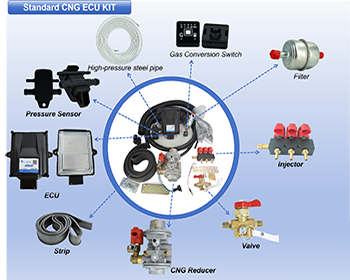
Core equipment compliance: Select components such as gas cylinders and pressure reducing valves that meet national standards, and prioritize the use of CNG specific rubber hoses that are ozone resistant and resistant to high temperature aging, to avoid rubber sticking and cracking that can cause air leakage after summer exposure.
Optimization of installation location: The installation location of pressure reducing valves, high-pressure pipelines, and other components should avoid high-temperature areas of the engine to prevent component performance failure caused by prolonged heating. At the same time, gas cylinders should be securely fixed to avoid collision damage during driving.
3、 Safety regulations for retrofitting construction
Working environment requirements: The modification workshop must have good ventilation, strictly prohibit smoking and open flames, and there should be no flammable or explosive materials within 5 meters of the surrounding area. Qualified fire-fighting facilities should be equipped to avoid the risk of natural gas accumulation and explosion caused by high temperatures in summer.
Hot work control: Before welding brackets, drilling and other hot work operations on the vehicle body, it is necessary to thoroughly clean the surrounding oil and flammable materials, protect the wiring harness and pipelines, and strictly prohibit direct welding and arc marking on gas cylinders and pipelines.
Light loading and handling operation: When handling and installing gas cylinders, handle them with care and do not roll or bump them. During installation, keep the gas device clean and do not operate component interfaces directly with oily hands.
4、 Special high-temperature testing after modification
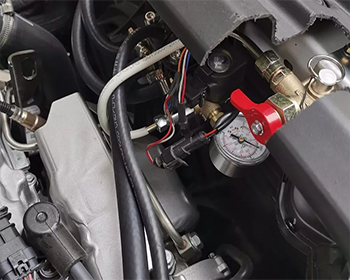
Leakage detection: After the modification is completed, use soapy water/specialized leak detector to inspect all pipeline joints and valve parts one by one. It is strictly prohibited to use open flames for leakage testing to confirm that there are no leakage points.
High temperature condition debugging: When the engine water temperature reaches 70 ℃ or above, adjust the gas to air mixture ratio and ignition advance angle to ensure sufficient natural gas combustion in high temperature environments and avoid problems such as backfire and unstable power.
Gas cylinder and system verification: After modification, the special inspection department completes the supervision inspection, obtains the installation supervision certificate and gas cylinder usage registration certificate, and confirms that the gas cylinder is firmly fixed and the high-pressure pipeline is not deformed due to compression.
5、 Summer exclusive usage tips
After the modification is completed, the "three checks and one replacement" should be implemented in daily use: before driving, after refueling, and when abnormalities are found, the air circuit sealing should be checked in a timely manner, and aging rubber vulnerable parts should be replaced regularly; Try to choose a cool and ventilated place when parking to avoid prolonged exposure to the sun and prevent gas cylinders from overheating and overpressure.
 Refer to:https://www.dnpindia.in/brand-reviews/auto/are-cng-cars-safe-in-extreme-summer-heat-heres-how-to-avoid-mishaps/405177/
The pictures and articles are from the internet. If there is any infringement, please contact us to delete them.
Popular articles
-
How the CNG Automotive S
Compressed natural gas (CNG) automotive systems
-
Advantages Of CNG Gas V
Compressed natural gas vehicles are vehicles th
-
What Is CNG Pressure Red
The pressure reducer of natural gas vehicle is
-
Reasons For High Gas Con
1. Original vehicle condition A. The tec
-
Differences Between Sing
Characteristics of Gas Single Point Device
-

How To Improve The Power
1. Install ignition advance angle What i
-

How The CNG Gas Vehicle
If you want to know – how does the CNG conversi
-

Advantages And Principle
LPG and CNG are two mainstream alternati





Latest comments
0piece comment
no comments, welcome to comment。