



How to choose an oil-to-gas conversion kit?
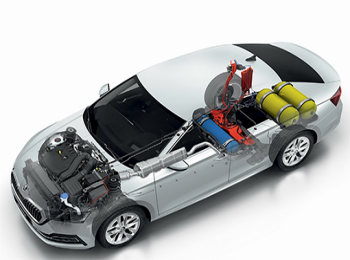
I.let's look at the core components: identify the performance of key components. The core of the gas kit consists of a pressure reducer, gas nozzle, ECU control module, gas cylinder, etc. The quality of each component directly affects the usage effect:
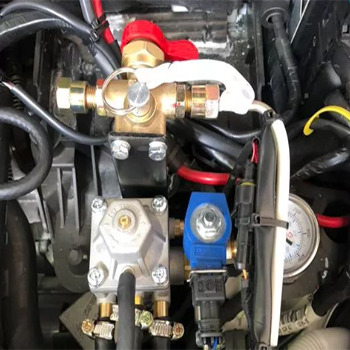
1. Pressure reducer (the core of the core)
Function: Reduce the high-pressure gas (around 20MPa) in the cylinder to a low pressure (0.1-0.2MPa) suitable for engine combustion, while heating the gas (to avoid frost formation affecting gas supply).
Key points of selection:
- Prefer those with temperature control and heating functions (especially in northern regions to prevent freezing at low temperatures);
- The material is chosen to be copper or aluminum alloy forged (resistant to high pressure and corrosion, avoiding the aging and air leakage issues common in cast iron parts);
- Look for models with pressure feedback regulation (to ensure stable pressure reduction and avoid engine vibration caused by inconsistent air supply).
Function: Precisely inject decompressed gas into the engine intake duct to control the air supply.
Selection points:
- The nozzle aperture needs to match the engine displacement (the larger the displacement, the larger the aperture, for example, a 2.0L model requires a larger aperture than a 1.6L model);
- Choose a high-precision atomizing nozzle (the more uniform the gas atomization, the more complete the combustion, the less power loss, and the lower the fuel (gas) consumption);
- Avoid plastic nozzles (they are prone to deformation at high temperatures, so metal materials are preferred).
3. ECU control module ("brain")
Function: Regulate the gas supply and ignition timing according to engine operating conditions (speed, load), ensuring compatibility with the engine (replacing or assisting the original fuel ECU).
Key points for selection:
- Prefer models with adaptive adjustment capabilities (able to automatically optimize gas supply parameters based on different road conditions and engine states, reducing the likelihood of the fault light illuminating);
- Support smooth switching between gasoline and electric power (ensuring no power interruption during switching, avoiding "jerky driving");
- Strong compatibility (especially for turbocharged models, it is necessary to choose an ECU with a "boost compensation" function to avoid insufficient air supply).
4. Gas cylinder (safety first)
Function: Stores high-pressure gas and serves as a core safety component.
Selection points:
- The product must be from a nationally certified and legitimate manufacturer (with a "Pressure Vessel Manufacturing License", the cylinder body marked with "CNG cylinder" and regular inspection marks);
- The material is chosen as a wound carbon fiber cylinder (which is more than 50% lighter than steel cylinders and has stronger impact resistance, suitable for private cars);
- Choose capacity as needed: For city commuting, choose 60-80L (with a range of 200-300 kilometers). For long-distance travel, you can choose 100-120L (but pay attention to the vehicle's load capacity to avoid overloading).
II. Identify reputable brands and qualifications: Reject "unbranded or unqualified products" Gas fittings involve high-pressure flammable and explosive gases, so qualifications and brand recognition are the bottom line. Avoid choosing small factories or refurbished parts just for the sake of cheapness:- **Mainstream brands**: In China, options include "NGV" and others; for brands from other countries, such as "AC from Poland, AEB from Italy" (with good stability but higher prices);
- Beware of "assembly kits": Some small factories assemble products using inferior components without certification, and we must resolutely avoid choosing such products.
III. Adaptability is key: Don't let "universal models" ruin your car. Different vehicle models (displacement, naturally aspirated/turbocharged, fuel injection method) have vastly different needs for gas kits. Blindly choosing a "universal model" can lead to a significant drop in power and frequent malfunctions:
- Naturally aspirated models: Choosing the basic package is sufficient (no need for complex tuning, high cost-effectiveness);- Turbocharged models: It is necessary to choose a kit with "boost pressure sensing" function (additional air supply is required when the turbocharger intervenes, otherwise knocking and loss of power may occur due to insufficient fuel);
- GDI (Gasoline Direct Injection) models: Choose carefully! Original direct injection engines have extremely high requirements for fuel injection accuracy, and most kits have poor adaptability, leading to carbon buildup and frequent malfunction lights. It is recommended to first consult with tuning shops to see if they have successful cases.
IV. Combination of usage scenarios: Practicality is king - urban short-distance commuting: Prioritize the "lightweight kit" (small-capacity cylinder + simplified ECU) to reduce vehicle weight and lower modification costs;
- Long-distance high-frequency use: Choose the "Endurance Priority" package (large-capacity cylinder + high-efficiency pressure reducer), while ensuring that the ECU supports "high-speed condition optimization" (to avoid gas supply not keeping up at high speeds);
- In low-temperature regions in the north: It is necessary to choose a pressure reducer with a "low-temperature preheating" function (either built-in electric heating or heating using engine coolant) to prevent frost from blocking the pipeline during gas pressure reduction in winter.
Ⅴ.Don't ignore installation and after-sales service: a good kit with poor installation = wasted effort. When choosing a kit, give priority to binding with qualified modification factories (which must possess "Motor Vehicle Modification Qualification" and can be filed with the local vehicle management office), avoiding the practice of "just buying the kit and installing it yourself" (improper installation is the main reason for air leaks and malfunctions);
- Ask about after-sales service: The warranty period for the kit should be at least 1 year (core components such as pressure reducers and ECUs are recommended to have a 2-year warranty), and there should be clear maintenance outlets (to avoid the situation where the product breaks and there is no one to repair it);
- Pay attention to the annual inspection of gas cylinders: For gas cylinders with standard components, they need to be inspected once every three years for the first time. When selecting, confirm that the manufacturer can provide inspection support.
Summary: The trick to avoiding pitfalls is to "prioritize CCC certification when selecting, choose branded core components; avoid generic models, and ensure installation and after-sales services are bundled." Choosing the right gas kit can not only reduce usage costs but also mitigate issues such as fault lights and loss of power. The key is to maintain the two lines of "safety" and "compliance," and not sacrifice reliability for low prices.
Refer to:https://www.viessmann.ca/en/guide/converting-from-oil-to-gas.html
The pictures and articles are from the internet. If there is any infringement, please contact us to delete them.
Popular articles
-
How the CNG Automotive S
Compressed natural gas (CNG) automotive systems
-
Advantages Of CNG Gas V
Compressed natural gas vehicles are vehicles th
-
What Is CNG Pressure Red
The pressure reducer of natural gas vehicle is
-
Reasons For High Gas Con
1. Original vehicle condition A. The tec
-
Differences Between Sing
Characteristics of Gas Single Point Device
-
How To Improve The Power
1. Install ignition advance angle What i
-

How The CNG Gas Vehicle
If you want to know – how does the CNG conversi
-
Advantages And Principle
LPG and CNG are two mainstream alternati





Latest comments
0piece comment
no comments, welcome to comment。