



Guidelines for Issues and Inspection Operations in the Use of CNG Conversion Kit
1. Pain point: Engine hesitation or stalling during oil-gas switching
Some users have reported that their vehicles experience shaking, power interruptions, or even stalling when switched to natural gas mode.
Solution: Check whether the electronic control unit (ECU) matches the original vehicle, with a focus on whether the oxygen sensor signals are synchronized. If the issue arises during the initial modification, the gas injection parameters can be recalibrated; if it persists over a long period, it is recommended to upgrade to a smart conversion system with a "soft switch" function (such as the Yixiang 150 system) to achieve a smooth power transition.
2. Pain points: Incompatible gas filling ports, difficulty in filling and air leakage
The cylinder port of the old CNG vehicle is relatively small, while most gas filling nozzles are larger. Forcing insertion can easily lead to wear of the sealing ring, air leakage, and even reporting of "abnormal inflation".
Solution: Install a small-to-large gas nozzle adapter, with one end connected to the original small-diameter valve port and the other end adapted to a standard quick-charging nozzle head. It comes with a self-locking buckle and a silicone sealing ring, enhancing air tightness and operational convenience.
3. Pain point: Difficulty in cold start, especially poor performance in winter
In low temperature environments, some CNG systems may encounter difficulties in starting due to poor gas atomization and excessively lean mixture.
Solution: Ensure that the modified system is equipped with the function of "using oil for cold start and automatically switching to gas after warming up"; meanwhile, check whether the heating and circulating water passage of the pressure regulator is unobstructed to prevent the gas temperature from being too low, which may affect combustion efficiency.
5. Pain point: Decreased power and fatigue during high-speed driving
Users have reported that the power output is inferior to that of gasoline mode after switching to natural gas, especially during hill climbing or high-speed overtaking.
Solution: Prioritize checking whether the power valve is stuck or improperly adjusted, and optimize the gas flow by fine-tuning the valve opening. At the same time, investigate whether there is any air leakage in the intake and exhaust manifolds to ensure that the mixture ratio is at its optimal state.
6. Pain point: The fault light is constantly on, causing a heavy psychological burden
After modification, the fault light illuminates in CNG mode and goes off when switched to gasoline. Although it does not affect driving, it is still worrying.
Solution: In most cases, this issue arises due to incomplete compatibility between the original vehicle's ECU and the CNG system signals, which is a normal occurrence. If the light persists or is accompanied by abnormal power issues, it is recommended to use professional equipment to read the fault codes and focus on checking whether key components such as the oxygen sensor and intake pressure sensor are compatible.

1. Basic performance and status inspection of vehicles
Confirm that the engine power is not less than 85% of the rated value, the torque is not less than 90%, and the entire vehicle meets the requirements of GB 7258 "Technical Conditions for Motor Vehicle Operation Safety", to avoid causing chain problems due to the modification of defective vehicles.
2. Verification of modification enterprise qualifications
Check whether the installation unit holds a CNG modification qualification certificate issued by a provincial-level or higher authority, confirm that it possesses standard testing equipment and a professional construction team, and prevent operations conducted by unqualified workshops.
3. Verification of compliance and new/old status of gas cylinders
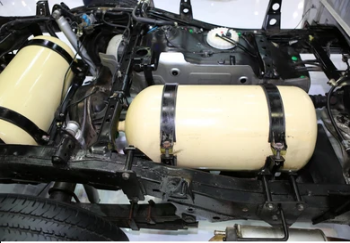
New cylinders must comply with the GB 17258 standard and pass over 10 safety tests, including hydrostatic bursting and fire resistance; comprehensive testing must be completed before reusing old cylinders, and it is strictly prohibited to use scrapped or damaged cylinders.
4. Confirmation of safety of high-pressure pipeline materials and joints
High-pressure pipelines should be made of dedicated stainless steel or reinforced plastic pipes, with a burst pressure not lower than 3.5 times 20MPa; the joints should use a ferrule-type structure (compliant with GB/T 3765) to ensure no aging, cracks, or looseness.
5. Functional testing of pressure reducing regulator and solenoid valve
The pressure reducer must comply with QC/T 671 standard, featuring overcurrent protection and pressure compensation functions; the gas solenoid valve must comply with QC/T 674, and the gasoline solenoid valve must comply with QC/T 675, ensuring smooth dual-fuel switching.
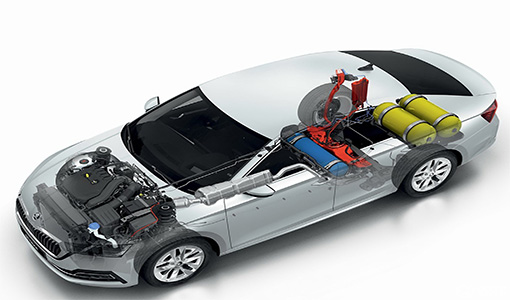
6. Inspection of gas cylinder installation location and isolation from heat sources
Gas cylinders should be kept away from heat sources such as exhaust pipes, with a distance of not less than 75mm. If the distance exceeds 200mm, a heat shield should be installed. The ambient temperature should not exceed 55°C to prevent abnormal pressure caused by high temperatures.
7. Verification of cylinder fixing strength and anti-loosening measures
Use at least 4 fixed points to connect the vehicle structural components. The thickness of the clamp flat steel should not be less than 4mm. The bolts should be equipped with anti-loose devices and tightened according to the specified torque. After installation, a six-direction stress test must be passed.
8. Inspection of pipeline routing and perforation protection
High-pressure pipelines should avoid high-temperature, friction, and collision areas, and protective rubber sleeves should be installed when passing through wallboard holes; low-pressure pipelines should be isolated from other components, with reasonable length control to reduce the risk of vibration wear.
9. Control system and instrument function testing
The high-pressure gauge has a range of 1.5–2 times the rated pressure, and the gas volume display complies with QC/T 413; the manual shut-off valve has an opening and closing range of 0.25–1.5 turns, and the ECU achieves automatic oil-gas switching and flameout gas cutoff.
10. Air tightness and leakage detection after installation
After installation, conduct a 20MPa air tightness test, ensuring no leakage during pressure maintenance inspection; apply soapy water to all interfaces and observe for any bubbles, confirming no leaks before driving on the road.
1. Safety preparations and nitrogen replacement before gas filling
Before the first filling, the CNG cylinder must undergo nitrogen replacement to eliminate the air inside and prevent the formation of combustible gas mixtures. The specific operation is as follows: Fill the cylinder with nitrogen to 0.5–0.6 MPa, let it stand, then vent it to 0.2–0.3 MPa. Repeat this process three times, and then fill the cylinder with natural gas to the rated working pressure.
2. Standardize station entry and gas dispensing operations
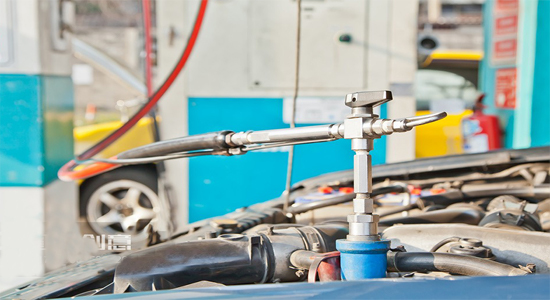
Before entering the gas station, turn off the engine, tighten the handbrake, and close all electrical equipment. Passengers should get off the vehicle and open the trunk for inspection. During refueling, professional personnel should operate, firmly insert the refueling nozzle into the port, observe the pressure gauge, and avoid overfilling.
3. Leak detection and sealing confirmation after gas filling
After refueling is complete, first close the valve and then remove the nozzle, and secure the fuel filler cap. Apply soap water to all connections and check for any bubbles. Only start the vehicle after confirming there are no leaks.
4. System self-check and startup process before vehicle dispatch
Before starting, slowly open the cylinder valve (it is strictly prohibited to stand directly in front of the valve), check whether the pressure on the high-pressure gas gauge is within the normal range (0.6–0.8MPa). After confirming that there is no gas or electrical leakage, turn on the ignition key, wait for 10 seconds, allow the gas pipeline to fully inflate, and then start the engine.
5. Low-speed test drive and mode switching verification
Initially, choose an open road section for driving, maintain a low speed (within 20km/h) for 5-10 minutes, and observe whether the engine runs smoothly. Then, gently press the switch while driving to test whether the fuel mode switch is smooth, without any hesitation or stalling.
Refer to:https://www.bajajgeneralinsurance.com/blog/motor-insurance-articles/cng-car-maintenance-and-safety-guide.html
The pictures and articles are from the internet. If there is any infringement, please contact us to delete them.
Popular articles
-
How the CNG Automotive S
Compressed natural gas (CNG) automotive systems
-
Advantages Of CNG Gas V
Compressed natural gas vehicles are vehicles th
-
What Is CNG Pressure Red
The pressure reducer of natural gas vehicle is
-
Reasons For High Gas Con
1. Original vehicle condition A. The tec
-
Differences Between Sing
Characteristics of Gas Single Point Device
-

How To Improve The Power
1. Install ignition advance angle What i
-

How The CNG Gas Vehicle
If you want to know – how does the CNG conversi
-
Advantages And Principle
LPG and CNG are two mainstream alternati





Latest comments
0piece comment
no comments, welcome to comment。