



Precautions and characteristics for using CNG ECU
The CNG ECU is the core control unit of the dual fuel gas system, which has the core ability to accurately regulate gas injection. At the same time, multiple safety and operating standards must be followed during use.
Core Features
(1) Precise closed-loop control: Real time collection of original vehicle fuel injection pulse width, oxygen sensor, water temperature and other signals, dynamic calculation of gas injection duration through correction coefficient matrix, combined with OBD-II closed-loop correction, to stabilize the air-fuel ratio near the theoretical equivalence ratio and avoid malfunction lights from lighting up.
(2) Dual fuel seamless switching: Supports torque fluctuation free switching between gasoline and CNG modes, and some models are compatible with LPG fuel, suitable for 3/4/6/8 cylinder electronic fuel injection gasoline engines with different displacements.
(3) Multiple safety protections: Built in self diagnostic function, automatic alarm and forced switch back to fuel mode in case of insufficient gas or system abnormalities, avoiding the risk of power interruption.
(4) Strong environmental adaptability: The working voltage covers 10-16V, and the working temperature range can reach -40 ℃~+120 ℃. It can adapt to complex working conditions such as high temperature, high humidity, and low temperature.
(5) Modification friendly design: The interface matches the original vehicle route without the need for extensive wiring changes, supports professional tools to customize gas injection MAP maps, and adapts to CNG gas sources with different gas compositions.
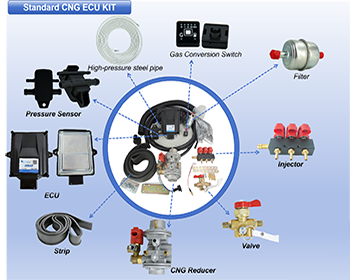
Precautions for use
(1) Startup and switching specifications: During cold start, priority should be given to igniting with gasoline. Wait for the engine water temperature to rise above 60 ℃ before switching to CNG mode to prevent low-temperature icing from damaging the pressure regulating sealing components; Hot start can be directly started with CNG, and it is necessary to confirm that the switching indicator light is in normal condition.
(2) Installation and wiring requirements: The signal wire must be accurately connected to the corresponding pins of the original vehicle OBD-II interface, and it is forbidden to accidentally connect the ignition coil or high-voltage wire to avoid signal interference and burning out the ECU; The grounding terminal should be reliably connected to the metal parts of the vehicle body to prevent faults caused by virtual connections.
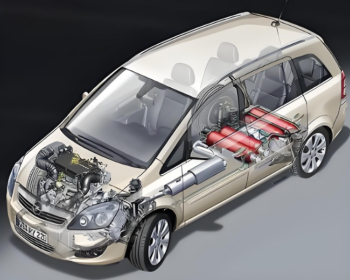
Daily maintenance taboos
(1) Be moisture-proof and waterproof, and avoid water splashing into the ECU housing during vehicle washing to prevent corrosion and damage to the circuit board.
(2) Wear an anti-static wristband before maintenance operations, as human static electricity can easily penetrate the precision electronic components inside the ECU.
(3) It is prohibited to use the starting power source directly to ignite without connecting the battery, as overvoltage can directly burn out the ECU chip.
(4) Do not disconnect the negative terminal of the battery before diagnosing the fault to avoid permanent loss of fault codes and calibration data stored in the ECU.
(5) Debugging and adaptation requirements: After installation, professional software must be used to complete the matching and debugging of the oil and gas pulse width curve, ensuring that the power output in gas mode is consistent with the original gasoline state of the vehicle, and avoiding long-term air-fuel ratio imbalance leading to engine carbon deposition and exhaust valve erosion.
(6) Environment and interference protection: The high-power car radio antenna should be kept away from the installation position of the ECU to avoid strong electromagnetic interference causing control signal disorder; The installation location should avoid the high temperature area of the engine to prevent long-term overheating and shorten the service life.
Refer to:https://www.acko.com/car-guide/cng-car-maintenance-and-safety-guide/
The pictures and articles are from the internet. If there is any infringement, please contact us to delete them.
Popular articles
-
How the CNG Automotive S
Compressed natural gas (CNG) automotive systems
-
Advantages Of CNG Gas V
Compressed natural gas vehicles are vehicles th
-
What Is CNG Pressure Red
The pressure reducer of natural gas vehicle is
-
Reasons For High Gas Con
1. Original vehicle condition A. The tec
-
Differences Between Sing
Characteristics of Gas Single Point Device
-
How To Improve The Power
1. Install ignition advance angle What i
-

How The CNG Gas Vehicle
If you want to know – how does the CNG conversi
-
Advantages And Principle
LPG and CNG are two mainstream alternati





Latest comments
0piece comment
no comments, welcome to comment。