



Introduction To Installation Precautions For CNG Gas Vehicle Conversion Kit
The installation of CNG gas conversion kits must strictly comply with national mandatory standards, and be operated by formal institutions with pressure vessel installation qualifications throughout the process. The core precautions cover compliance, components, construction, and testing processes, and eliminate major safety hazards such as high-pressure leaks and explosions.
Compliance and Qualification Precautions
1. Institutional qualification verification: It is necessary to select a legitimate unit that holds provincial-level CNG modification certification and Class II or above automotive repair qualifications. It is strictly prohibited for unqualified institutions to disassemble and assemble gas cylinders, and it is forbidden to excavate, repair, weld or repair gas cylinders.
2. Kit compliance confirmation: Select kits that have been certified by the state and are completely compatible with the vehicle engine model, reject products with three no inferior qualities, and prioritize multi-point sequential injection systems to ensure gas supply accuracy.
3. Vehicle pre inspection and troubleshooting: Before modification, comprehensively check the engine cylinder pressure, ignition system, and aging of the original vehicle circuit. Vehicles with severe engine wear and abnormal working conditions are prohibited from modification to avoid the amplification of faults after gas modification.
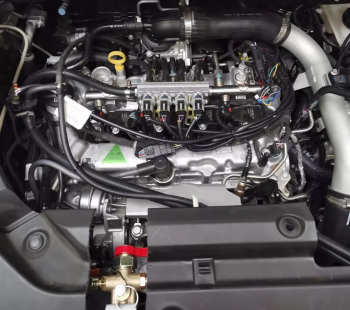
Key precautions for installing core components
1. Gas cylinder installation protection: The steel seal on the gas cylinder nameplate must be complete and clear, and winding gas cylinders are strictly prohibited from scratching or bumping the composite material layer; A rubber shock-absorbing pad with a thickness of ≥ 2mm should be placed between the gas cylinder and the bracket. After the fastening belt is locked, it needs to pass a 20g longitudinal acceleration strength test. The distance between the gas cylinder and the open flame should not be less than 10 meters. A ventilation outlet pipe must be installed at the position of the gas cylinder valve in the trunk.
2. Pipeline sealing requirements: High pressure pipelines should use double sleeve self-locking stainless steel joints, laid along the inner side of the chassis, with a clamp spacing of ≤ 600mm, and a distance between the pipeline and the exhaust pipe of ≥ 75mm. If it is insufficient, insulation boards should be added to prevent ordinary industrial joints from replacing vehicle specific high-pressure joints.
3. Electrical component layout: CNG ECU and ignition pre starter should be kept away from high temperature, rainy and humid areas, with sufficient insulation distance from the ignition high-voltage line. Explosion proof electrical components must be selected for the trunk, and the wiring should be completely laid along the original owner's wiring harness without damaging the original vehicle core circuit.
4. Installation specifications for pressure reducers: The pressure reducer must be vertically fixed at the position of the engine compartment firewall, with an installation height lower than the lowest liquid level of the coolant auxiliary water tank, to avoid pressure reduction failure caused by air resistance and ensure stable pressure reduction of 200bar high-pressure gas to 2bar working pressure.
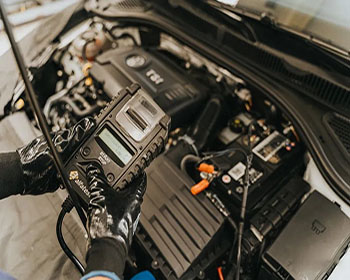
Precautions for mandatory testing after installation
1. Airtightness test: Pressurize with nitrogen to 1.5 times the working pressure, maintain the pressure for 10 minutes, and the pressure drop should not exceed 1%. At the same time, use an electronic leak detector to test all joints point by point to confirm that there are no leakage points.
2. Pressure resistance test: The CNG system is pressurized to 2.5 times the rated working pressure for 5 minutes, and all pipelines and components are free of deformation and leakage.
3. System calibration and verification: Use specialized software to accurately calibrate the gas injection pulse width, optimize the ignition advance angle, set the automatic oil and gas switching logic after the water temperature meets the standard, and avoid engine shaking and malfunction lights.
4. Road test acceptance criteria: Complete a 20 kilometer or more actual vehicle road test to confirm smooth oil and gas switching, normal power output, and no abnormal conditions such as stalling, abnormal noise, or leakage before delivery for use.
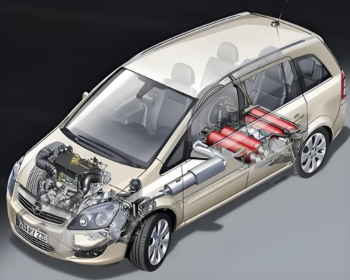
Follow up procedures and closing precautions
1.After the modification is completed, the modification factory will issue a complete set of modification qualification certificates and cylinder water pressure test reports. The gas cylinder usage registration will be handled at the local special equipment supervision department, and the fuel type labeling on the driving license will be updated at the vehicle management office. The modification information will be reported to the insurance company simultaneously to ensure complete legality and compliance.
2. It is prohibited to use CNG during the running in period of the new car. It is recommended to keep more than 10 liters of gasoline in the fuel tank all year round, switch to gasoline every 3000 kilometers, and drive 50 kilometers to avoid long-term idle failure of the fuel system.
Refer to:https://www.acko.com/car-guide/cng-car-maintenance-and-safety-guide/
The pictures and articles are from the internet. If there is any infringement, please contact us to delete them.
prev:Precautions and characteristics for using CNG ECU
next:nothing
Popular articles
-
How the CNG Automotive S
Compressed natural gas (CNG) automotive systems
-
Advantages Of CNG Gas V
Compressed natural gas vehicles are vehicles th
-
What Is CNG Pressure Red
The pressure reducer of natural gas vehicle is
-
Reasons For High Gas Con
1. Original vehicle condition A. The tec
-

Differences Between Sing
Characteristics of Gas Single Point Device
-

How To Improve The Power
1. Install ignition advance angle What i
-

How The CNG Gas Vehicle
If you want to know – how does the CNG conversi
-

Advantages And Principle
LPG and CNG are two mainstream alternati





Latest comments
0piece comment
no comments, welcome to comment。